
Career Opportunities Across the Modern Packaging Industry
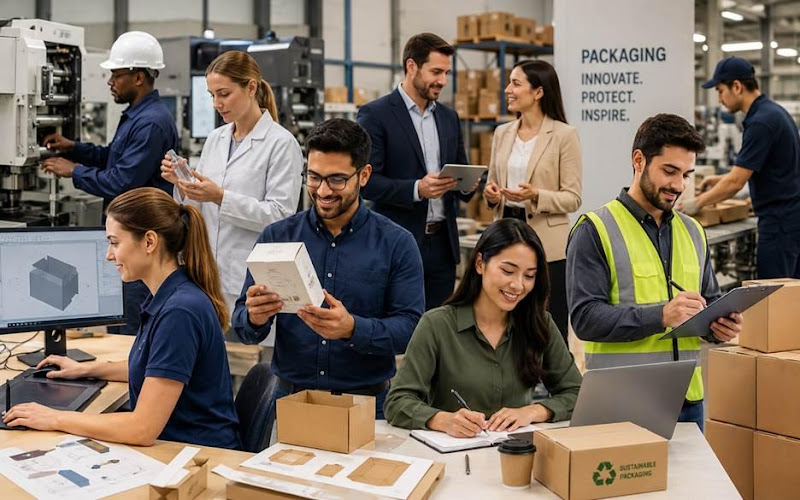
Packaging industry is much bigger than making cardboard boxes or putting graphics on a container. Modern packaging connects engineering, design, marketing, manufacturing, sustainability and supply chain operations. For university students this industry can offer career paths which are both technical and creative. Many students never consider packaging as career because it is not always discussed as separate major. However almost every physical product needs packaging, so professionals are required across many departments.
1. Packaging Design and Creative Careers
Packaging design is one of most visible areas of industry. Designers work on how package looks, feels and communicates with customer.
Common Creative Roles
- Packaging Designer
- Packaging designers develop graphics, layouts, typography and visual identity.
- They also need understand printing limits and how artwork will appear after box is folded.
- Knowing Adobe Illustrator, Photoshop and basic dieline structure can be very useful.
- Structural Packaging Designer
- Structural designers focus more on physical construction instead of graphics.
- They develop folds, closures, inserts and shapes that protect products.
- A design may look beautiful on screen but it still must work properly during production.
- Prepress and Artwork Specialist
- Prepress professionals prepare customer artwork before printing.
- They check bleed, colors, fonts, image quality and cutting lines.
- It requires very careful eyes because small artwork mistake can become thousands printed mistakes.
2. Engineering and Product Development Careers
Students from engineering programs can also find many opportunities across packaging companies.
Packaging Engineers
- Packaging engineers study materials, product protection, compression strength and transportation conditions.
- They may test whether package survives drops, vibration, stacking or changes in temperature.
- Engineers often work with manufacturing teams to make sure new designs can actually run on machinery.
- This job have mix of laboratory testing, computer work and real production problem solving.
Students interested in structural protection can also learn about corrugated packaging because it is widely connected with shipping, transportation and e-commerce applications.
Research and Development
R&D teams test new materials, coatings, structures and manufacturing methods. Some professionals may work on lightweight packaging while others investigate recyclable or fiber-based alternatives. Research role can be good choice for students who enjoy experiments and solving problems where answer is not already clear.
3. Manufacturing and Production Opportunities
A package must move from design computer into real factory. This creates large number of manufacturing-related careers.
Production Roles Can Include
- Production Planner
- Coordinates schedules, materials and machine availability.
- They make sure customer orders are produced at correct time.
- Machine and Process Specialist
- Works with printing, cutting, folding, gluing or forming equipment.
- Modern factories are increasingly using automation so technical knowledge is becoming more valuable.
- Quality Control Specialist
- Checks dimensions, print consistency, material quality and finished product performance.
- Quality teams help stop defective products before they reaches customer.
Working production is sometimes fast and problems comes without warning. A machine can stop, color can become little different or material may not behave same every time. Person working there need to make decision quickly and communicate with many people.
4. Supply Chain and Logistics Careers
Packaging and logistics are closely connected because every inch and ounce can influence transportation.
Why Logistics Professionals Matter
- Supply chain specialists evaluate carton sizes, pallet arrangements and shipping efficiency.
- Packaging that is unnecessarily large can increase storage and freight costs.
- Poor protection can result in damaged products, returns and dissatisfied customers.
- Professionals may coordinate between suppliers, factories, warehouses and transportation companies.
Students studying operations, logistics or supply chain management may find packaging knowledge gives them additional advantage. There are many calculation and decisions happen before one box finally reach consumer.
5. Sustainability and Materials Careers
Environmental concerns are changing packaging industry and creating newer career opportunities.
Sustainability Specialists
Sustainability professionals may analyze material usage, recyclability, sourcing and waste reduction. Their responsibility is not simply saying package is “green.” They need understand material science, regulations, recycling systems and sometimes life-cycle assessment.
Careers can include:
- Sustainable packaging specialist
- Materials researcher
- Environmental compliance coordinator
- Circular economy analyst
- Packaging optimization consultant
This field suits students from environmental science, chemistry, engineering and sustainability programs.
6. Sales, Marketing and Customer-Facing Careers
Not every packaging career requires engineering or design degree. Business and marketing graduates can enter sales, account management and customer service positions.
Packaging Sales and Account Management
- Sales professionals help businesses select suitable packaging according to product size, branding, budget and quantity.
- Account managers coordinate between customer, designers and production teams.
- Strong communication is important because requirements can change during project.
For a practical industry reference, zeepackaging.com shows how commercial packaging can include different structures, materials, printing and finishing choices. Students can review such industry websites to understand how packaging options are presented to real customers.
7. Technology Is Creating New Packaging Jobs
Modern packaging companies also need professionals who understand software, automation and data.
Emerging Opportunities
- Digital printing specialists
- Packaging automation engineers
- CAD and 3D visualization professionals
- E-commerce packaging analysts
- Robotics technicians
- Packaging data and workflow coordinators
Technology is making packaging more interdisciplinary than before. Someone may start career in graphic design and later move into structural development, or engineering graduate may become project manager after several years.
Building a Career in Packaging
University students do not need know their exact packaging career immediately. Internships, plant visits, alumni conversations and small packaging projects can help them see which area fits their skills.
Students should develop combination of technical knowledge and communication ability. Learning about materials, printing, manufacturing and supply chains gives useful foundation even for business-oriented roles. Asking professionals about real projects can also show what classroom lessons sometimes cannot.
Conclusion
Modern packaging industry offers careers across design, engineering, manufacturing, logistics, sustainability, technology and business. It is industry where creative ideas must meet cost, machinery and customer expectations at same time.
For students who enjoy solving practical problems, packaging can provide many directions to grow. Product may change from cosmetics to electronics or food, but need for effective packaging remain. Understanding these different career paths early can help students discover opportunities they may not have considered before.